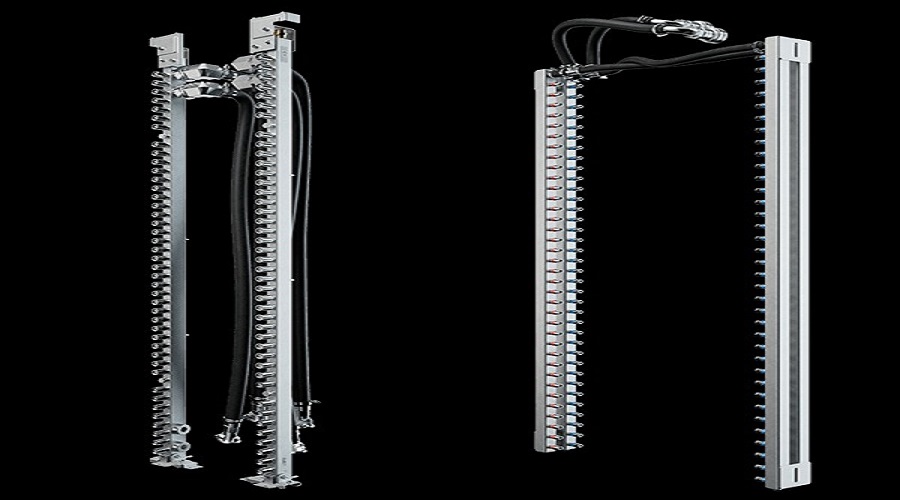
As artificial intelligence, high-performance computing, and other compute-intensive workloads increase rack power density, data center liquid-cooled operators are rethinking how they remove heat from critical IT equipment. Within that cooling architecture, the rack manifold performs a fundamental distribution role. It provides the interface between rack-level server cooling loops and the broader coolant distribution infrastructure, helping deliver coolant to multiple servers while maintaining predictable flow and pressure conditions.
Table of Contents
- What Is a Rack Manifold?
- Why Manifold Design Matters in High-Density Data centers
- 1. Start With the Server and Rack Architecture
- 2. Choose the Right Orientation
- 3. Evaluate Top-Feed and Bottom-Feed Designs
- 4. Design for Balanced Coolant Flow
- 5. Pay Close Attention to Quick Disconnects
- 6. Select Materials for Long-Term Fluid Compatibility
- 7. Plan the Port Count and Connection Layout Carefully
- 8. Decide Between Single-Sided and Dual-Sided Arrangements
- 9. Consider Standards and Certification Requirements
- Common Rack Manifold Design Mistakes to Avoid
- Designing Only for Initial Capacity
- Ignoring Pressure Losses From Connections
- Poor Hose Management
- Assuming Coolant Compatibility
- Frequently Asked Questions
- What does a rack manifold do in a liquid-cooled data center?
- Can one liquid-cooled server be serviced without shutting down the entire rack?
- Is vertical or horizontal manifold mounting better?
- How important is pressure drop in manifold design?
- What materials are commonly used for liquid-cooling manifolds?
- Can a manifold be integrated into an existing data center?
- Conclusion
What Is a Rack Manifold?
A rack manifold is a fluid-distribution assembly installed within or alongside a server rack. In a direct liquid cooling architecture, it distributes coolant between the facility or rack cooling infrastructure and the individual coldplate loops installed in servers. CoolIT Systems notes that its CDUs provide coolant at controlled flow rates and pressures and that complete fluid-distribution systems can include piping, valves, and manifolds.

Why Manifold Design Matters in High-Density Data centers
Modern AI accelerators and HPC processors can create substantial heat loads within a relatively small rack footprint. When many liquid-cooled servers share the same distribution architecture, small design decisions can have rack-wide consequences.
For operators, the key objective is to create a rack manifold system that provides sufficient coolant distribution without making installation, maintenance, or future hardware changes unnecessarily difficult. Several factors deserve particular attention.
1. Start With the Server and Rack Architecture
Start manifold selection with the equipment that needs cooling, rather than treating the manifold as an isolated component.
Document:
- Rack format and usable height
- Number of liquid-cooled servers
- Server height and position
- Required supply and return connections
- Expected coolant flow per server
- Allowable pressure drop
- Hose routing requirements
- CDU connection architecture
- Maintenance clearances
- Potential future server configurations
These details determine port quantity, port spacing, manifold dimensions, mounting location, and connection orientation. CoolIT Systems describes rack manifolds as distribution systems mounted to server racks that manage coolant flow to individual servers.
Consider Future Rack Density
A design that works for the initial deployment may become restrictive when operators install higher-density servers. Canadian operators developing new AI infrastructure should consider whether future racks may contain more accelerators, different server heights, or greater liquid-cooling requirements.
2. Choose the Right Orientation
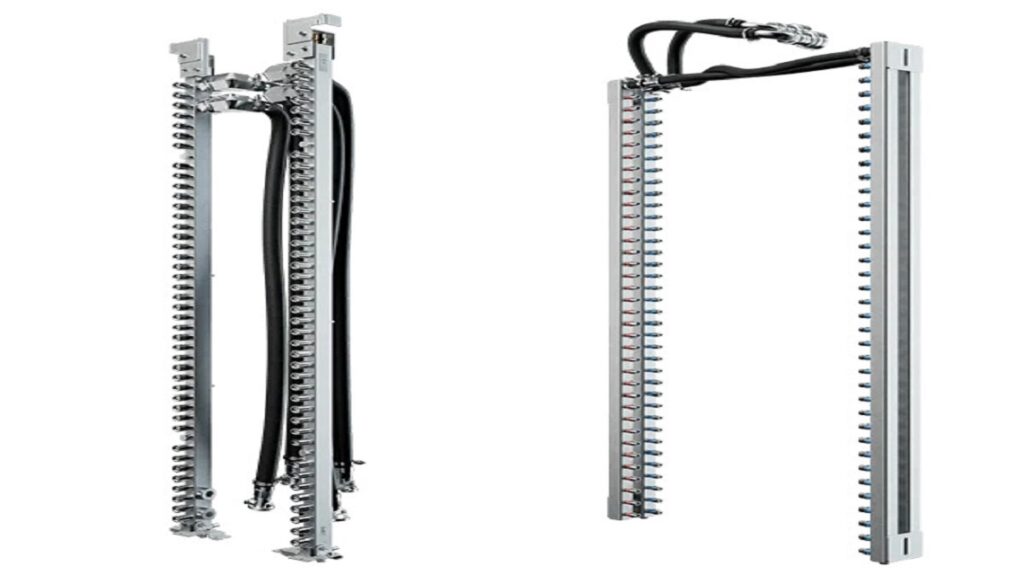
The referenced manifold range supports both horizontal and vertical orientations, showing why manifold geometry should match the rack rather than be selected independently. A reliable server rack manifold can generally be arranged vertically or horizontally depending on rack architecture and connection requirements.
Vertical Configuration
Vertical manifolds can work well where supply and return lines need to run alongside a tall stack of servers.
Horizontal Configuration
Horizontal designs can be useful for specific chassis layouts, dense blade configurations, or installations where connection points need to align closely with particular server positions.
3. Evaluate Top-Feed and Bottom-Feed Designs
Facility piping location is another important consideration. A top-feed configuration may suit new Canadian data center builds where cooling distribution piping is routed overhead. Bottom-feed arrangements can suit facilities using underfloor infrastructure or retrofits involving existing raised-floor distribution.
The referenced product architecture supports top and bottom feeds, as well as single- and dual-feed designs.
4. Design for Balanced Coolant Flow
Hydraulic performance is one of the most important aspects of manifold engineering. Every component in a liquid-cooling loop creates some flow resistance. When designing a DLC rack manifold, engineers should evaluate total flow demand, branch resistance, port geometry, connection losses, and expected operating pressure, not just manifold dimensions.
5. Pay Close Attention to Quick Disconnects
Dry-break connections let technicians disconnect a server cooling loop while limiting coolant release. Depending on the deployment, connectors may support hand-mate or blind-mate arrangements. The referenced manifold designs offer all-metal dry-break QDs with both approaches.
6. Select Materials for Long-Term Fluid Compatibility
Material selection influences durability, corrosion resistance, and coolant cleanliness. Consider the manifold body, fittings, seals, hoses, coldplates, and coolant together. Mixing incompatible materials or operating outside validated coolant specifications can increase long-term reliability risks. The referenced manifold range uses corrosion-resistant treated stainless steel construction.
7. Plan the Port Count and Connection Layout Carefully
Too few connection points can limit future configuration options. However, adding ports without engineering justification may increase complexity, component count, and potential service points.
A practical design review should consider:
- Current server count: How many liquid-cooled nodes will be connected immediately?
- Connection requirement: Does each server require one supply/return pair or a different arrangement?
- Server spacing: Do ports align naturally with the installed chassis positions?
- Future configuration: Is expansion likely within the same rack?
The server rack manifold should complement the physical rack layout so hoses do not obstruct neighbouring servers, power distribution equipment, cabling, or routine service access.
8. Decide Between Single-Sided and Dual-Sided Arrangements
Depending on the number and location of required quick disconnects, manifolds may use single-sided or dual-sided connection layouts. A single-sided design DLC rack manifold may simplify access in some racks, while dual-sided arrangements can accommodate configurations that require more QDs or different routing patterns.
9. Consider Standards and Certification Requirements
Data center projects in Canada may need to satisfy several layers of requirements, including provincial electrical and building codes, occupational health and safety obligations, insurer requirements, equipment certifications, and facility-specific engineering standards. The appropriate requirements depend on the province, facility, equipment, and installation scope.
Common Rack Manifold Design Mistakes to Avoid
Designing Only for Initial Capacity
AI and HPC infrastructure can evolve quickly. Designing solely around today’s server count can make future upgrades unnecessarily difficult.
Ignoring Pressure Losses From Connections
Quick disconnects, hoses, valves, coldplates, and fittings all contribute resistance. Hydraulic calculations should account for the complete circuit.
Poor Hose Management
Even a technically correct cooling layout can become difficult to operate when hoses obstruct server removal, cabling, or rack access.
Assuming Coolant Compatibility
Do not assume that every coolant is compatible with every manifold, seal, fitting, or coldplate. Use validated specifications for the complete fluid loop.
Frequently Asked Questions
What does a rack manifold do in a liquid-cooled data center?
It distributes supply coolant to multiple liquid-cooled servers and collects the returning coolant before it moves back through the cooling infrastructure. In this way, the manifold acts as the rack-level interface between the distribution network and individual server coldplate loops.
Can one liquid-cooled server be serviced without shutting down the entire rack?
A properly engineered system using suitable dry-break quick disconnects can support individual server disconnection while other branches remain operational. Actual maintenance procedures should still follow the specifications of the installed cooling and industrial equipment.
Is vertical or horizontal manifold mounting better?
Vertical mounting often suits conventional rack layouts with many servers stacked through the rack height, while horizontal arrangements can suit particular blade or chassis architectures.
How important is pressure drop in manifold design?
It is critical. Excessive pressure drop increases hydraulic resistance and can make it more difficult to deliver the required coolant flow across the system. Manifold geometry, fittings, QDs, hoses, valves, and coldplates should therefore be evaluated together.
What materials are commonly used for liquid-cooling manifolds?
Stainless steel is frequently used because of its strength and corrosion resistance. Material choice should nevertheless be based on the coolant chemistry and the other wetted materials throughout the cooling loop.
Can a manifold be integrated into an existing data center?
Potentially, yes. Retrofit feasibility depends on available rack space, existing piping, CDU capacity, server compatibility, hose routing, and facility infrastructure. Top-feed and bottom-feed options can provide flexibility for different facility layouts.
Conclusion
Effective direct liquid cooling depends on more than selecting high-performance coldplates or a capable CDU. The distribution architecture connecting those components matters just as much. A properly engineered DLC rack manifold should align with server geometry, deliver predictable hydraulic performance, provide reliable connections, support practical maintenance, and leave room for realistic infrastructure changes.
Looking for local liquid-cooling expertise? Use the map to find the nearest CoolIT Systems location and discuss rack manifold configuration, CDU integration, and data center cooling requirements with a specialist.