
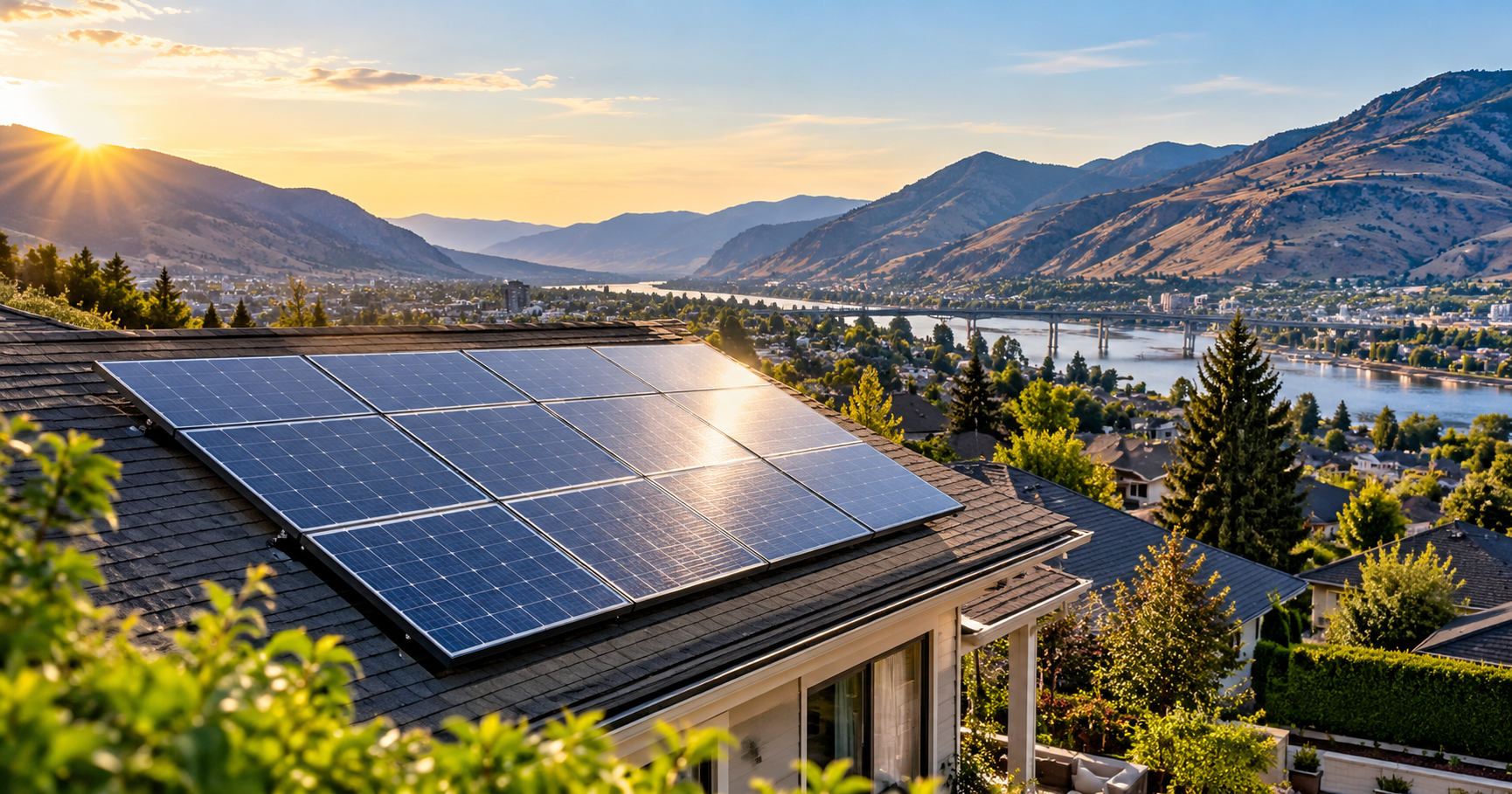
For homeowners looking for ways to improve household energy efficiency, solar power is becoming an increasingly relevant option. Kamloops has a dry Interior climate, considerable sunshine, hot summers, and cold winters, creating changing energy demands throughout the year. Installing solar panels in Kamloops may help a household generate more of its electricity on-site, but whether solar is worthwhile depends on the property, roof conditions, electricity consumption, system size, available sunlight, and long-term energy goals.
Table of Contents
- Why Consider Solar Panels in Kamloops?
- How Do Residential Solar Panels Work?
- Are Solar Panels in Kamloops Financially Worthwhile?
- Consider Solar as Part of a Whole-Home Energy Plan
- How Do Solar Panels and Heat Pumps Work Together?
- What Should You Check Before Installing Solar Panels?
- What Questions Should You Ask a Solar Provider?
- How Can Homeowners Make a More Informed Solar Decision?
- Frequently Asked Questions
- Are solar panels effective in Kamloops?
- How many solar panels does a Kamloops home need?
- Do solar panels work during winter in Kamloops?
- Can solar panels work with a heat pump?
- Are cold climate heat pumps suitable for Kamloops homes?
- Should I replace my roof before installing solar panels?
- What should I compare when reviewing solar quotes?
- Frequently Asked Questions
- Conclusion
Why Consider Solar Panels in Kamloops?
One of the most important factors affecting residential solar performance is access to sunlight. Kamloops experiences considerable sunshine throughout the year, which makes solar energy worth evaluating for suitable residential properties.
However, regional sunshine alone cannot determine whether an individual home is a good candidate for solar. Roof orientation, pitch, surrounding trees, nearby buildings, available surface area, and seasonal shading can all influence how much sunlight reaches an array.
The age and condition of the roof also matter. Because solar equipment can remain in place for many years, homeowners should understand whether roofing repairs or replacement may be required before installation. A property-specific assessment provides a clearer picture of whether solar panels in Kamloops are appropriate than relying solely on general regional conditions.
How Do Residential Solar Panels Work?
Solar photovoltaic (PV) panels convert sunlight into electricity. The panels generate direct-current electricity, which an inverter converts into alternating-current electricity that can be used by household appliances and electrical systems.
Electricity production varies throughout the day and across seasons. Panels generally produce more electricity when sunlight is strong and unobstructed, while shading, shorter daylight hours, snow coverage, weather conditions, and system orientation can influence overall output.
When considering solar panels in Kamloops, homeowners should therefore look beyond the number of panels that can physically fit on a roof. Appropriate system planning should consider historical electricity consumption, available roof space, solar exposure, equipment specifications, and possible changes in future electricity demand.
Understanding Household Electricity Consumption
Two similar homes can have very different electricity requirements. Occupancy, appliances, insulation, heating and cooling systems, electric vehicles, water heating, and everyday habits can all affect annual consumption.
Reviewing previous electricity bills can provide a useful starting point. Homeowners can then compare their consumption patterns with estimated solar production to better understand how a proposed system could fit their needs. This step is particularly important when other electrification projects are being considered.
Are Solar Panels in Kamloops Financially Worthwhile?
There is no single payback period or financial outcome that applies to every home. Installation costs, system capacity, electricity consumption, solar exposure, equipment selection, financing, utility rates, and available programs can all influence the economics of a residential solar project.
Instead of focusing only on how quickly a system might pay for itself, homeowners considering solar panels can ask several practical questions:
- How much electricity does the household currently use?
- Is the roof suitable for a long-term solar installation?
- How much unshaded roof space is available?
- Could household electricity demand increase in the future?
- What equipment is included in the proposed system?
- What warranties apply to the equipment and installation?
- Are there current utility programs or incentives that may apply?
Incentives and program requirements can change, so homeowners should confirm current eligibility, terms, and availability with the relevant government agency, utility, or program administrator before making financial decisions.
Consider Solar as Part of a Whole-Home Energy Plan
Solar generation is only one part of household energy performance. Insulation, air sealing, heating equipment, cooling systems, windows, appliances, and everyday energy use can all affect how much electricity a home requires. Taking a whole-home approach can be particularly helpful when several upgrades are being considered.
For example, someone researching air conditioning in Kamloops may want to compare different cooling options and understand their expected electricity consumption. If solar is also being considered, projected summer cooling demand can form part of the overall system-planning process.
Similarly, homeowners considering heat pump installation in Kamloops should account for how a new system could change annual electricity use before determining an appropriate solar system capacity. Planning these improvements together does not mean every property requires every technology. Instead, it gives homeowners a more complete understanding of how individual upgrades may interact.
How Do Solar Panels and Heat Pumps Work Together?
Solar panels generate electricity, while heat pumps use electricity to transfer heat between indoor and outdoor environments. Depending on the system, a heat pump can provide both heating and cooling. This creates an important planning consideration for homeowners.
A property switching from another heating source to an electric heat pump may experience a change in annual electricity consumption. If solar panels are being considered at the same time, expected heat-pump usage can be factored into the solar assessment.
For this reason, households planning heat pump installation in Kamloops may benefit from discussing future heating and cooling requirements when evaluating a solar system. The goal is not necessarily to offset every unit of electricity consumed. Instead, system planning should reflect the home’s characteristics, energy goals, available installation space, budget, and expected consumption.
What Should You Check Before Installing Solar Panels?
1. Roof Condition and Remaining Life
The roof should be evaluated before solar equipment is installed. If substantial roofing work is expected in the near future, completing it first may help avoid removing and reinstalling solar equipment later.
2. Roof Orientation and Shading
Roof direction, pitch, trees, chimneys, neighbouring structures, and other obstructions can affect solar exposure. A site assessment can help identify these factors and determine the usable installation area.
3. Current and Future Energy Use
Historical electricity consumption provides useful information, but future needs should also be considered. An electric vehicle, home addition, electric water heater, new cooling equipment, or heat pump installation in Kamloops could change household electricity demand. Discussing these plans before sizing a solar system can support more informed decisions.
4. Solar Equipment and Installation
Homeowners should understand which solar panels, inverters, mounting components, and monitoring systems are included in a proposal. It is also useful to review product warranties, workmanship terms, installation procedures, electrical requirements, monitoring capabilities, and expected maintenance before proceeding.
5. Realistic Solar Production Estimates
Solar production estimates should be based on property-specific information rather than broad promises. Weather, shading, roof orientation, system size, equipment performance, seasonal conditions, and other variables can affect actual electricity generation. Estimates should therefore be viewed as projections rather than guaranteed outcomes.
What Questions Should You Ask a Solar Provider?
Before choosing a system for solar panels, homeowners should ask how the proposed capacity and estimated electricity production were calculated.
Useful questions include:
- How was annual solar production estimated?
- How have roof orientation and shading been considered?
- What type of panels and inverter are proposed?
- What warranties apply?
- How will system performance be monitored?
- How are roof penetrations and mounting handled?
- What maintenance may be required?
- How could future household upgrades affect system sizing?
Homeowners can also discuss plans for an electric vehicle, air conditioning, or cold climate heat pumps in Kamloops. Providing this information can help create a more complete picture of future electricity needs.
How Can Homeowners Make a More Informed Solar Decision?
A good solar decision begins with the property rather than a generic estimate. Homeowners can start by reviewing electricity bills, considering the age and condition of their roof, identifying possible shading, and thinking about future household changes. They can then request a property-specific assessment that explains proposed system capacity, estimated production, equipment, installation requirements, and relevant limitations.
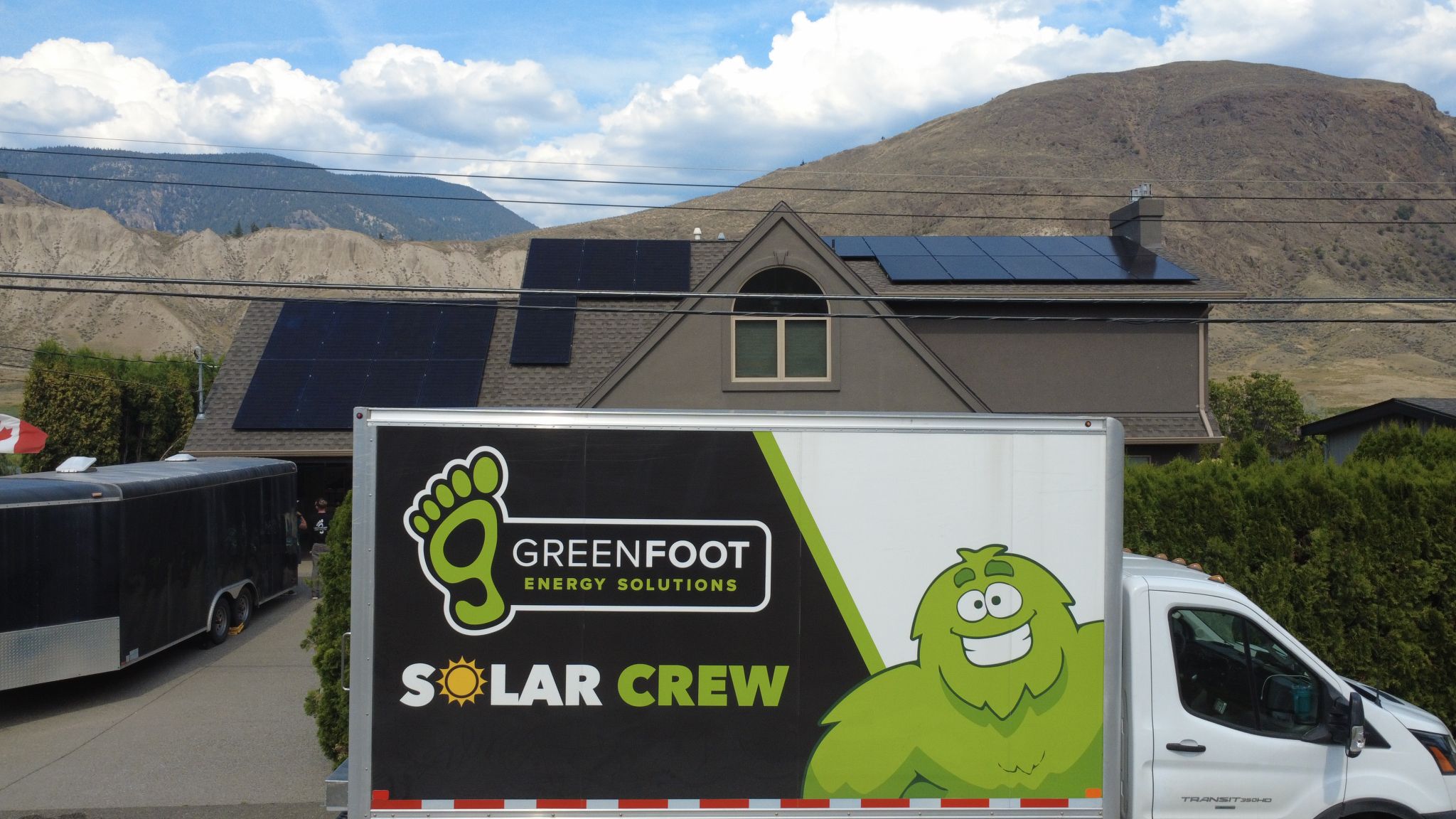
It is also useful to consider solar alongside other energy-efficiency improvements. Better insulation or changes to heating and cooling equipment can influence household energy consumption and may affect longer-term planning. Greenfoot Energy Solutions provides solar, heat pump, air conditioning, insulation, and related home-energy services in the Kamloops area. Homeowners exploring multiple upgrades can use a whole-home assessment to better understand how these systems may relate to one another.
Frequently Asked Questions
Are solar panels effective in Kamloops?
Kamloops receives considerable sunshine, making solar worth evaluating for suitable properties. Actual electricity generation depends on roof orientation, shading, weather, system size, equipment performance, and other site-specific factors.
How many solar panels does a Kamloops home need?
There is no standard number for every property. The appropriate system size depends on electricity consumption, usable roof space, solar exposure, panel capacity, future energy requirements, and the homeowner’s goals.
Do solar panels work during winter in Kamloops?
Yes. Solar panels can generate electricity during winter when sunlight reaches them. Shorter daylight hours, weather, snow coverage, shading, and system orientation can influence seasonal production.
Can solar panels work with a heat pump?
Yes. Solar panels generate electricity, while a heat pump uses electricity for heating and cooling. When both are being considered, expected heat-pump electricity consumption can be included when evaluating solar system capacity.
Are cold climate heat pumps suitable for Kamloops homes?
They may be suitable for many properties, but the correct choice depends on the home’s heating load, insulation, layout, local conditions, equipment specifications, and installation. A property assessment can help determine appropriate options.
Should I replace my roof before installing solar panels?
If a roof is nearing the end of its service life or requires substantial repairs, addressing that work before installing solar may be practical. A roof assessment can help homeowners determine the appropriate sequence.
What should I compare when reviewing solar quotes?
Look beyond the initial price. Compare system capacity, estimated production, equipment specifications, warranties, installation scope, monitoring options, assumptions used in projections, and any ongoing maintenance requirements.
Conclusion
For homeowners asking whether solar panels in Kamloops are worth considering, the answer depends largely on the individual property and its energy needs. Kamloops’ solar conditions make residential solar an option worth evaluating, but roof suitability, shading, electricity consumption, system capacity, future electrification, and budget should all be considered before making a decision. Looking at solar alongside insulation, air conditioning, heat pump installation, and other home efficiency improvements can also provide a clearer view of long-term household energy requirements. A property-specific assessment is ultimately more useful than relying on general savings claims or one-size-fits-all estimates.
Considering solar or other energy upgrades for your Kamloops home? View Greenfoot Energy Solutions on the map to explore the location, get directions, and plan your next step.